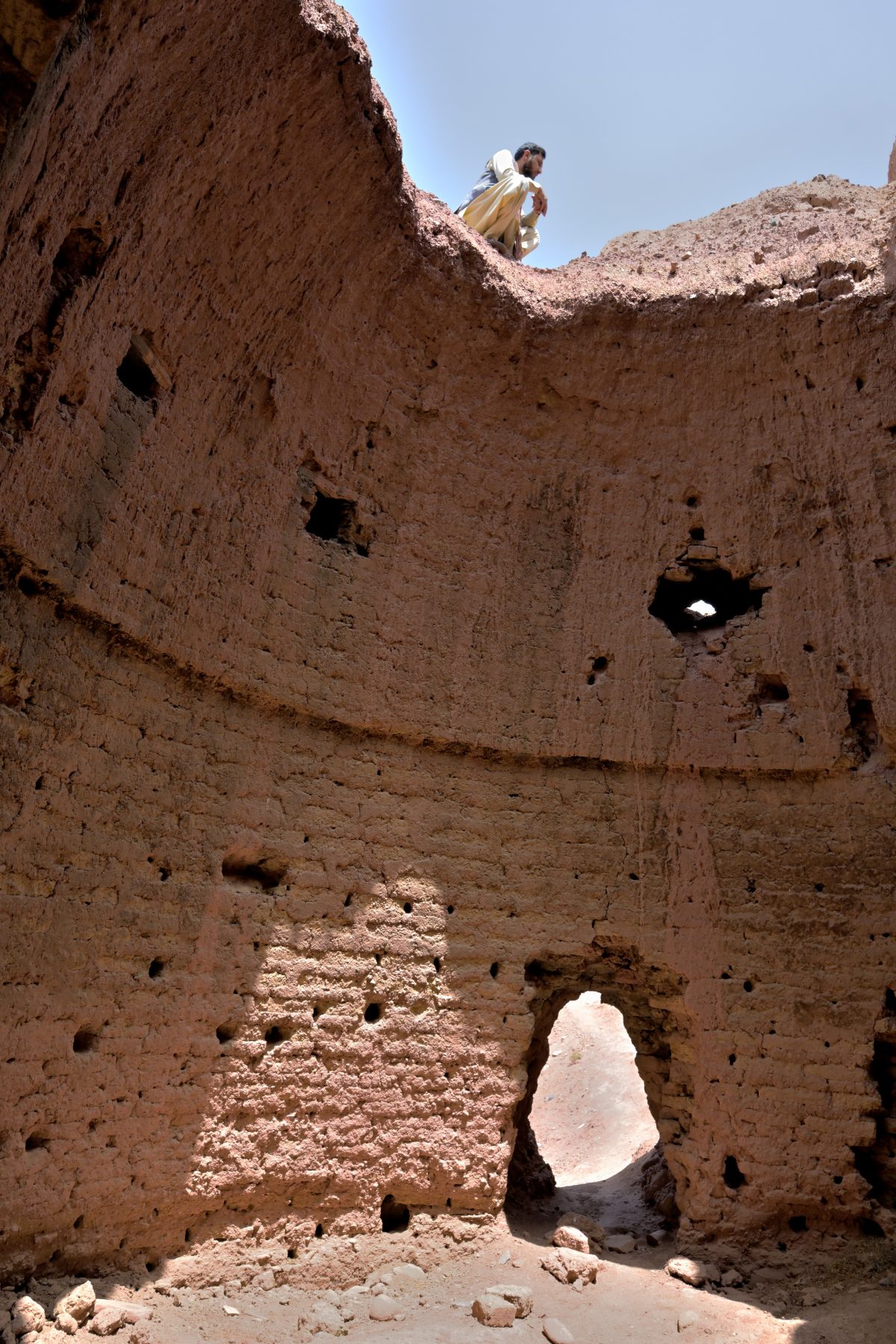
01 the wall keeps its holes until you look
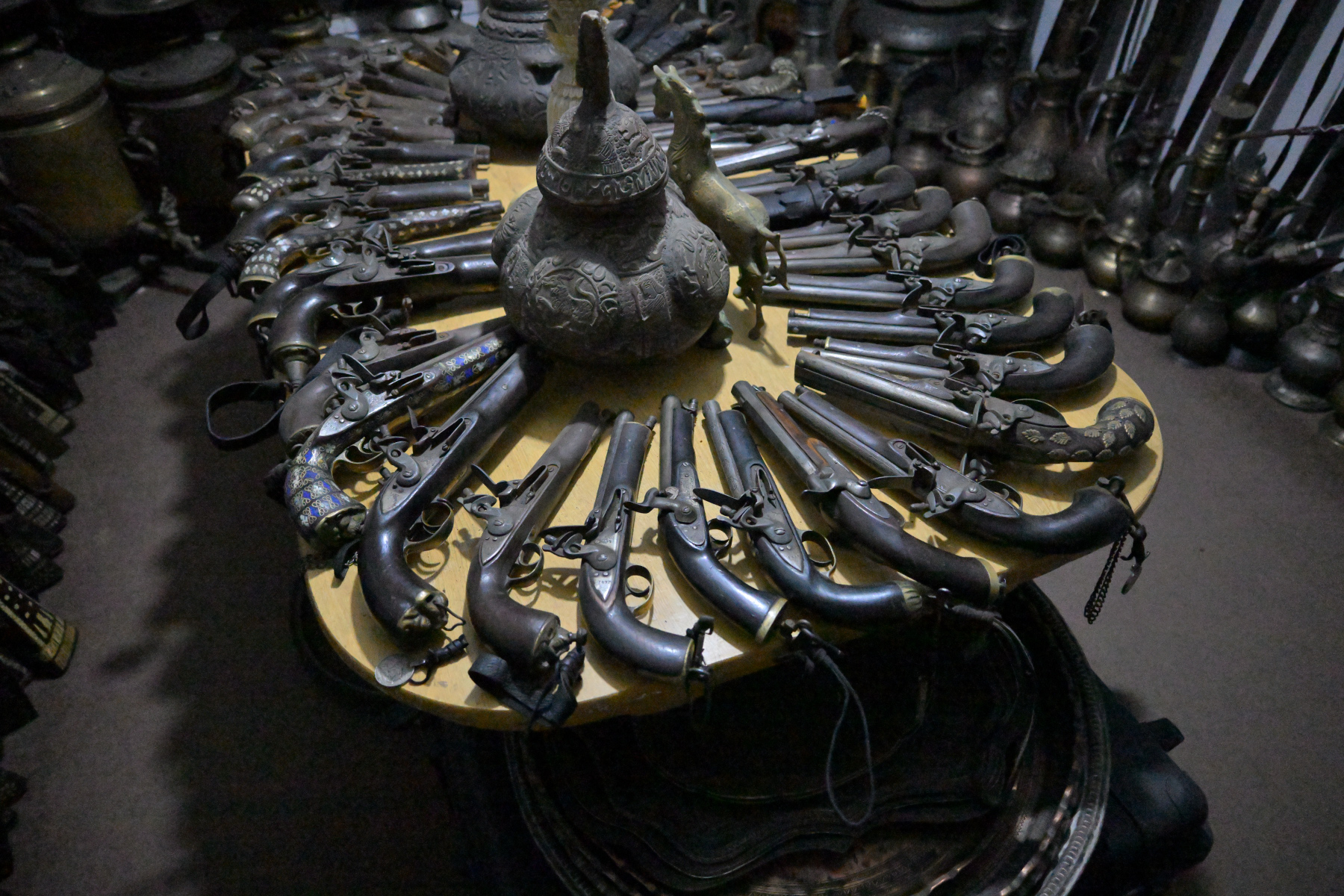
02 nothing here was hidden, only unlit
You hold the only light in the room.
What the beam skips keeps its dark intact.
Looking is not free. It costs an act of attention.
03 read by touch, not by sight
Notes
What it is
A dark room with one rule: the cursor is a torch, not a spotlight. It has warm falloff, a breathing radius, a slight candle-tremor, and grain that only thickens where the light actually falls. Nothing brightens until the beam physically arrives there — the adobe wall, the dagger case, and three short lines of text all stay in the dark by default. Scrolling moves you between three chambers; the torch keeps working inside each one.
What it costs
One fixed canvas layer (dust motes + beam glow, capped at 2× device pixel ratio), a CSS radial-gradient mask per revealed layer, and an inherited pair of custom properties (--mx, --my) so no per-element JS math is needed beyond the active chamber's bounding rect. The render loop cancels entirely on tab-hide and idles when nothing is moving. Two photographs, already web-sized, no video, no WebGL. The optional night ambience loads nothing until you ask for it.
Documentary transfer
This is the shape of looking at someone else's place: you don't get the whole wall at once, you get what you're willing to walk your attention toward, hole by hole, and a face only appears if you happen to stop there. A testimony, a redacted frame, an image released in fragments under consent limits — the same mechanic could gate real footage instead of asking a viewer to simply scroll past it. The cost of seeing is made literal instead of assumed.